Cartonera Publishers / Editoriales Cartoneras : Home
Created by...
This Research Guide was created by Laura Schmidli, Lauren Pagel, Paloma Celis Carbajal and Cassidy Reis. Redisigned in 2013 by Jaclyn Lang.
What are Cartoneras?
The Spanish word cartón translates into English as cardboard.
Cartoneros is the word used in Argentina to refer to people who make their living by collecting cardboard and other materials to recycle. This word can vary significantly in each Spanish speaking country.
Cartoneras refers to publishing houses that have grown out of this recycling or salvage economy. These small, independent publishers provide a better return on recycled cardboard by turning that cardboard into books. These books are then made available to people at prices lower than that of large publishing houses, broadening people's access to literature.
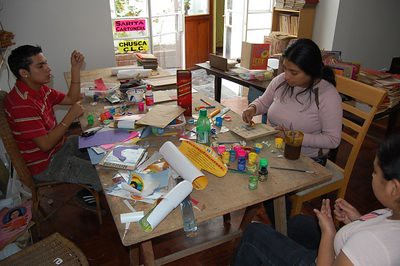
Cartonera books appear in Latin America as we witness the fast-paced development of new publishing technologies. These books are composed of photocopies that are bound by hand into cardboard covers. Each cover is hand embelished, making every copy a unique object in itself. Their name comes from the Spanish word cartonera (cardboard picker). This word is used by many of these publishing houses as their “last name” such as Sarita Cartonera, Animita Cartonera, etc. Cartonera has also become the term to refer to their books or to all of the cardboard book publishers, known in Spanish as editoriales cartoneras (cardboard picker publishing houses).
About this Guide
The landscape of Latin American cartonera publishers is constantly changing and growing. Our aim is to update this guide as often as possible, to provide a starting point for researchers and to gather together influential resources on this movement.
Even though all cartoneras publish most, if not all, of their titles in print, due to the nature of cartoneras and the information landscape in Latin America a majority of resources about them are electronic, in the form of blogs, wikis, forum postings, newsletters and newspaper or journal articles. New material is published daily, as new cartoneras also form daily. A majority of the material is in Spanish or Portuguese language.
With a growing collection of over 2,300 volumes (as of August 2023), UW-Madison’s Ibero-American collection holds one of the largest and most comprehensive cartonera collections in the U.S. This collection is a work in progress, and new titles and resources are added periodically to the print collection, the database and this research guide.

The Ibero American Studies Collection has started the private Facebook Group "Libros Cartoneros: reciclando el paisaje editorial en America Latina" to inform its members of any related news. If you are interested, please feel free to request joining.
